Across the river, a boy stands still. He is home for summer vacation, but there is no smile or excitement. No rush to run inside. He just looks afar at the house waiting for him on the other side: a plain, unpainted brick house, a fishing net hanging in place of a proper door, and trash piled beside the wall.
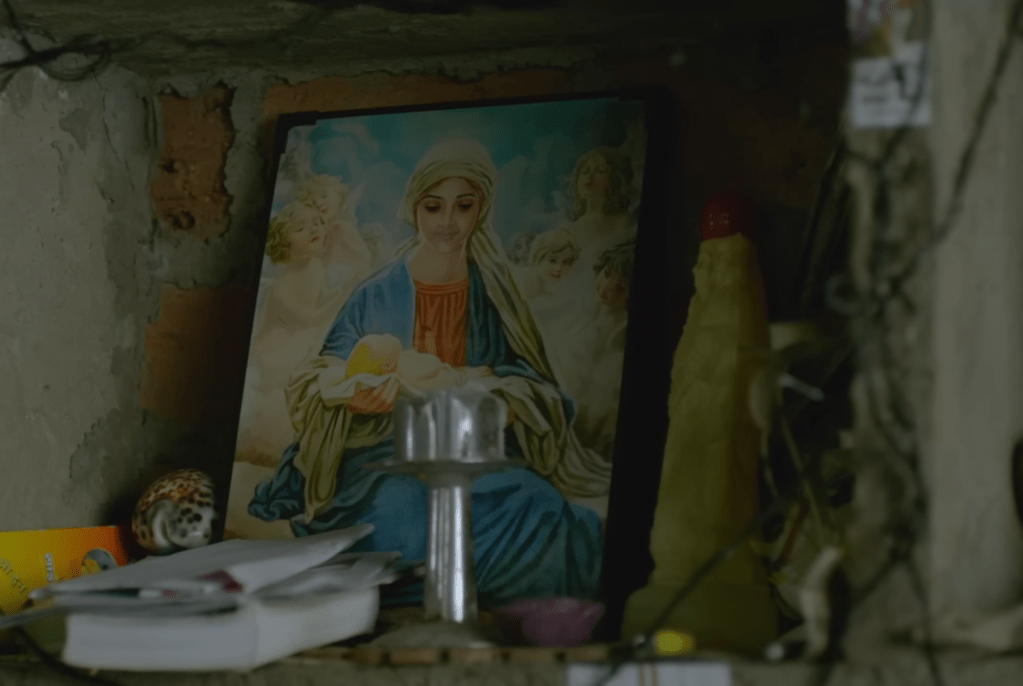
This is one of the opening scenes of the Malayalam movie, Kumbalangi nights. Franky, the youngest boy in the family, has returned from his hostel. When he finally enters the house, everything feels disorganized and abandoned. He slouches onto the couch, and his eyes catch a picture of Mother Mary hidden away on a wall shelf.
As the movie unfolds, we begin to understand that the house has no real parental presence. His older brothers are wounded in their own ways and disconnected. They are aimless and simply surviving.
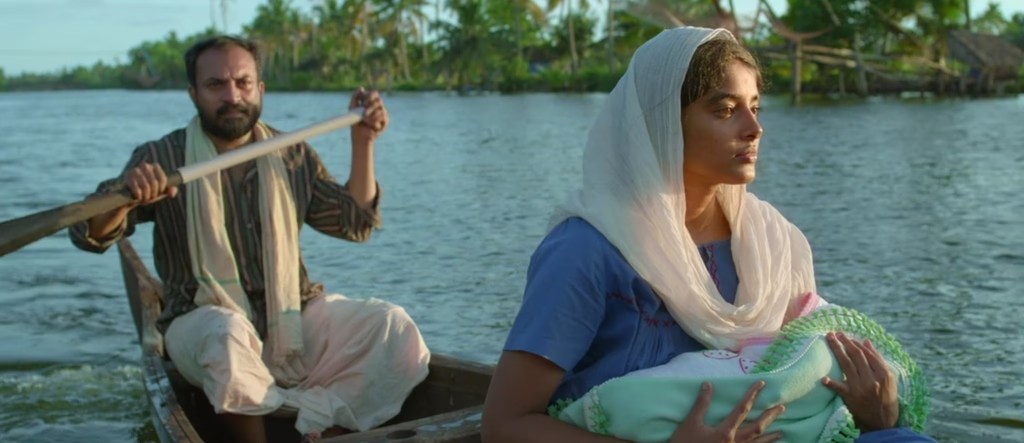
Later in the movie, after grief, mishaps and unexpected turns, there is a scene where the eldest brother rows his canoe, bringing home with him his dear friend’s widow, who had just given birth to a newborn child. This time, the house is not empty, but there is a whole family waiting outside to receive her. With a white veil over her hair holding her infant, like Mother Mary arriving with newborn Jesus into a broken home that no one wanted.
Makane… Njaan undu arikathu oru kaanaakkannottam aayi
Makane… Njaan undu akalathu oru kaaval maalakha aayi
My son, I am close by, watching over you in unseen ways. My son, I am far away, like a guardian angel keeping watch.
Even after so many years, this movie holds a dear place in my heart. It makes me wonder what makes a place home? Is it a clean space? A functional family? A stable income? Is it a house where everything is in order and where no one is wounded.
Living in a city like Philly, away from my own home for the past four years, has taught me about longing. During my time here, I was fortunate enough to experience friendships that made me feel at home through conversations, laughter and prayers.
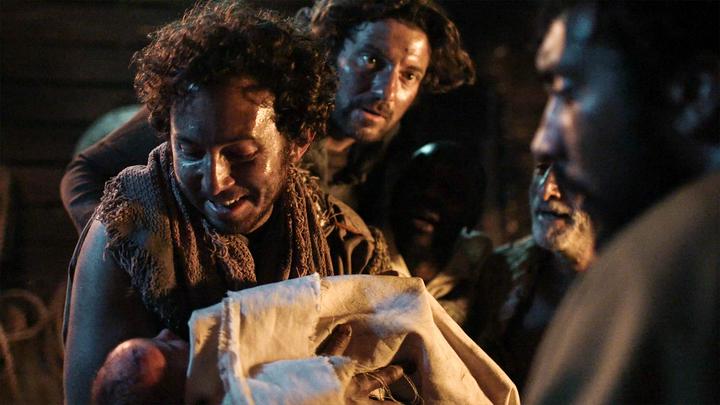
Almost two years ago, on Christmas Eve, my friends and I returned to the city after Mass. I had not gone home for Christmas that year. Even though I was surrounded by friends, I felt the absence of home more deeply. At that time, I also did not have a job or a stable income. Beneath the joy of Christmas, I remember carrying a quiet fear inside me of not knowing what was next. It was already midnight, but none of us wanted to go to sleep. My friends suggested that we watch the Nativity episode from The Chosen, portraying the birth of the Messiah through the eyes of a shepherd.
Like Franky’s broken house in Kumbalangi Nights, the shepherd knew what it meant to be pushed aside and feel unworthy. On Christmas night, he sits alone by the stream washing the cut on his arm after the others refused to share their dinner with him. The water is cold and the darkness is vast around him. Nearby, the small fire get blow out by the wind. Then a ray of light shone in his direction. The other shepherds near the tents fall to their knees and shield their eyes with their hands. Stunned by what has just happened, the shepherd runs toward the light, still limping and hungry.
After watching the episode, I wanted to see Christmas lights. So when my friends suggested a light night drive to Bethlehem, Pennsylvania, it sounded perfect. It was past midnight when we got to the small quaint town. But when we arrived, there was almost nothing. No grand lights, just quiet streets.
Just like the house across the river. Beside the shepherd washing his wound.
In the small town sleeping under the cold December sky.
Mary enters a forgotten home with a child in her arms.
whispering “Makane, Njaan undu arikathu” My child, I am close by.
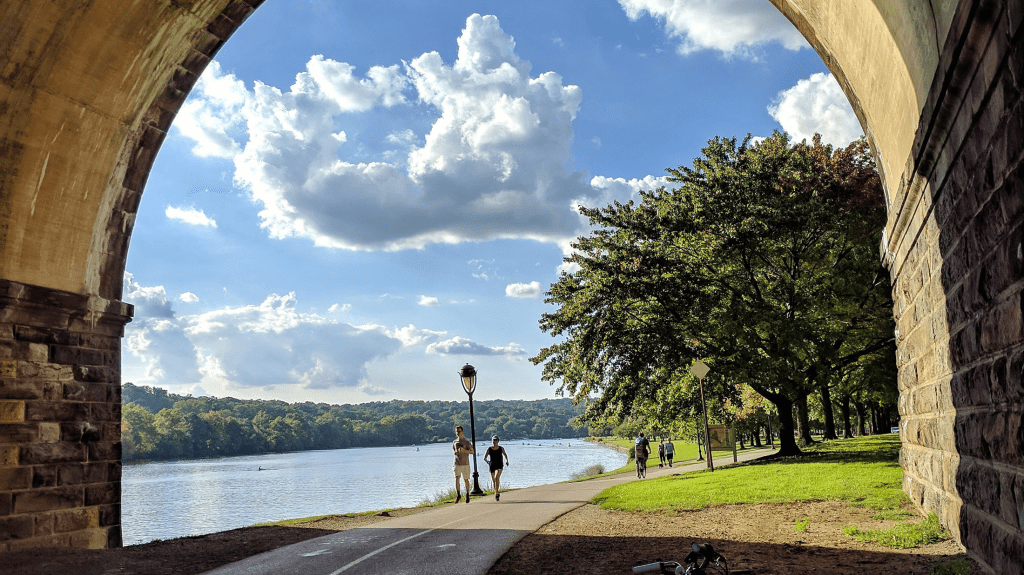
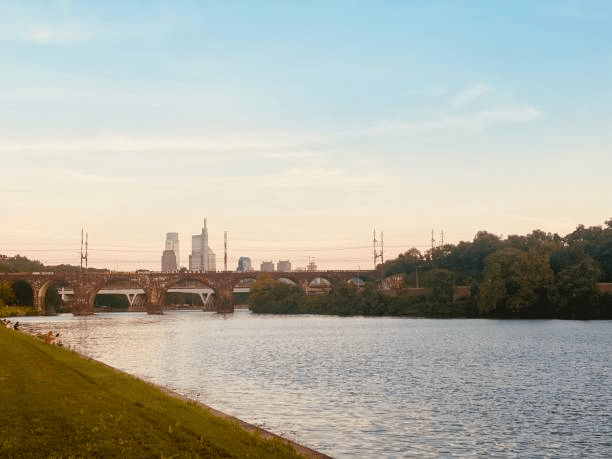
The water moves gently along the Schuylkill trail while the breeze brushes against my skin. The birds chirp as the city slowly wakes. As I pick up speed, my breathing grows heavier, blending with the rhythm of my footsteps against the pavement. Early summer mornings in Philly have become one of my favorite times to run. If I am not writing or reading on these summer days, it is normal to find me lacing up my shoes for a run. It has become a place where my thoughts settle long enough for words to form clearly. After finishing my run, I quickly get dressed to make my way to the station.
The train platform buzzed softly with movement. Coffee cups rested in people’s hands as they made their way toward another workday. The sound of rolling suitcases against the floor, the muffled announcements being made overhead filled the station as I boarded the train and I took one of the window seats. As the train pulled out of Philadelphia toward DC, the city slowly faded, replaced by rivers, warehouses, and rows of trees rushing by in silence. The sound of the engine settled into a rhythm almost like a heartbeat. Train rides remind me of the season in my life when I first moved to Philly, and how I used to take the Amtrak almost every month to visit my brother and niece in Jersey. But this time, I was heading south toward DC for a Pentecost retreat. Part of me felt sad knowing that I am not in Texas celebrating the ordination of a brother from our community. Especially during Pentecost, it felt meaningful to witness someone say yes to the LORD in such a radical way. It felt like this season was overflowing with vocations, with lives quietly being offered back to God.
It was just last weekend that a deacon from my parish was ordained as part of the Archdiocese of Philadelphia. I remember the church already overflowing with people when I entered. I stood in the back for most of the liturgy, occasionally sitting on the side steps to rest my legs. Families filled the pews. Young adults crowded the aisles. The scent of incense lingered heavily in the air while cream vestments moved softly near the altar.
At one point during the ordination, the eight deacons laid prostrate across the floor before the altar while the Litany of Saints echoed through the cathedral. Their bodies pressed against the marble as the choir and crowd prayed over them in unison. Priests from across Philadelphia and nearby cities filled the sanctuary beside the altar, having come to witness the ceremony. Later, the archbishop placed his hands over their heads in silence before the other priest followed behind him to do the same. The line seemed endless. Near the end of the rite, the newly ordained priests knelt before the archbishop with their hands folded together in prayer while their palms were anointed with oil and gently wrapped in white cloth.
Watching the ceremony unfold, it felt something ancient like a quiet surrender that was being passed down from generation to generation. The cathedral felt so alive with the incense rising slowly through the air, voices echoing against the wall, and silence between each prayer.
After the ceremony ended, I waited outside the main church to welcome the newly ordained priests as they came out. Excitedly, I took out my phone to capture the moment. First came the altar server carrying the cross, then the archbishop, followed by the priests and knights of Columbus, uniformed in suits with swords at their sides. The hallway suddenly filled with loud applause as the newly 8 ordained priests finally stepped through the cathedral doors.
Among them was the deacon from my parish who had gone on a mission trip with me this past lent to Peru. Filled with joy, I reached out and tapped his hand. He turned toward me for a brief moment, and we exchanged a bright smile before he continued greeting the crowd. Seeing him stand at the altar, I was taken back to my mission days in Peru. I was reminded how quietly the Holy Spirit moves through the people we journey beside and through the missions that remain with us.
Back at the retreat in DC, sitting before the Blessed Sacrament, I remember how last year around this time during adoration, I felt my vision slowly blurring. I rubbed my eyes a few times, but everything still felt unfocused. There was a longing in me I could not fully explain. I eventually stepped outside feeling lightheaded, carrying a heaviness that stayed with me long after adoration ended.
Later that evening during prayer, I came across the passage where Jesus says, “Blessed are those who have not seen me and yet believe.” The word stayed with me long after. Now that Ascension and Pentecost just passed, I keep thinking about Christ promising that we would not be left orphaned. There was a point in my life when I could only write when I am ready, feeling inspired or being led by the Holy Spirit. For years, I wrote mostly out of restlessness like fragments of thought, observations, little pieces of myself I did not know what to do with. But somewhere between adoration, silence, and long periods of waiting, writing stopped feeling like self-expression and more like prayer.
By the time I stepped outside later that evening, rain had begun falling softly across the city while people hurried past umbrellas. I walked slowly through DC back to my friend’s apartment in silence, letting the cool rain settle against my skin like breath returning after exhaustion. The water moved through the gutters beneath the passing traffic, carrying forward the prayers from the cathedral, the hands laid in blessing and the words I once struggled to write.
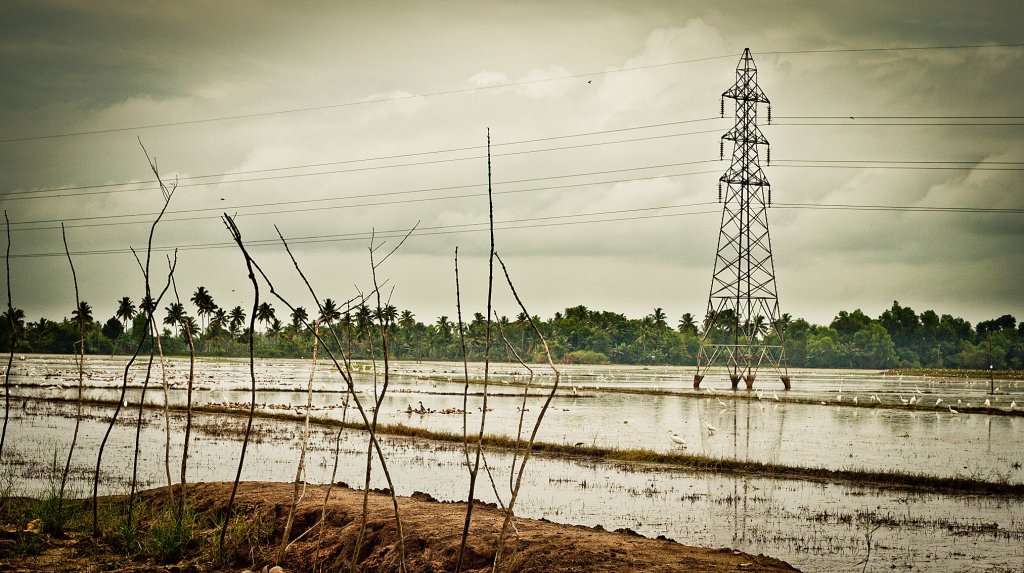
The rain had not stopped for days. Heavy clouds blanketed the sky from morning until night as water overflowed onto narrow roads and flooded the rice fields. Trees swayed against the wind while the sound of rain striking the Odu (clay-tiled) rooftops and river constantly was heard throughout. The scent of wet earth drifted through the windows alongside the cool monsoon air that summer of 2004.
Schools had closed because the roads were too flooded to travel safely, and my mom would not let my brother and I play outside because she was afraid we’ll go too close to the river. The strong currents moved through the waters as ripples spread endlessly across the surface. I was feeling restless staying indoors for so many days. Around that time, a local neighbor brought us a DVD copy of The Passion of the Christ. I remember feeling strangely excited simply because it was something new to watch while the rain continued endlessly outside.
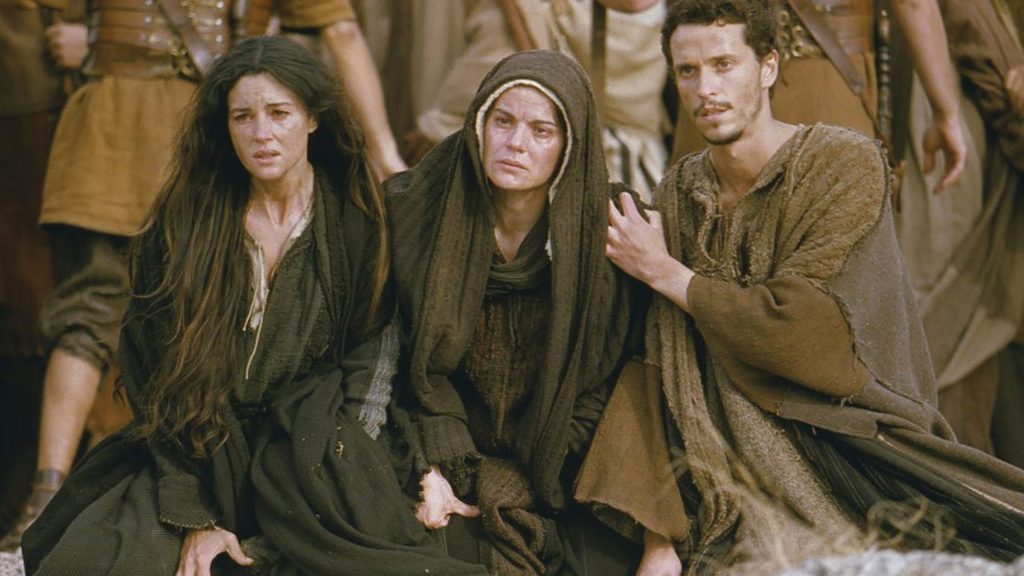
I had not yet started Bible school at our parish because I was still too young, so many of the stories about Christ were unfamiliar to me. Through out the movie, I asked my mom so many questions. “Who are the people standing beside Mother Mary?” “Why is that person carrying a strange-looking baby?” I felt confused throughout most of the film, still too young to fully understand everything unfolding on the screen. But there was one scene that deeply struck me. It was the moment Jesus, fell to the ground while carrying the heavy wooden Cross. Not too far away stood Mother Mary watching Him with grief in her eyes.
Hearing all my questions, my mom fondly told me that my older sister was very much like this too, always curious and excited about Jesus. She shared how, even at just 2 years old, my sister used to sing Kurishinte Vazhi, the Malayalam stations of the Cross hymn sung during Good Friday services back home in India. The hymn traces Christ’s journey to Calvary through the fourteen stations, beginning from His condemnation before Pontius Pilate to His burial in the tomb. As the people walked from station to station placed around the church grounds meditating on Christ’s Passion, my sister would kneel at every station while singing the hymn, perhaps simply because she saw everyone else doing it.
I can almost imagine my sister doing that because when I look at my four-year old niece now, she asks similar questions, retells Bible stories with excitement, and speaks so innocently about Jesus.
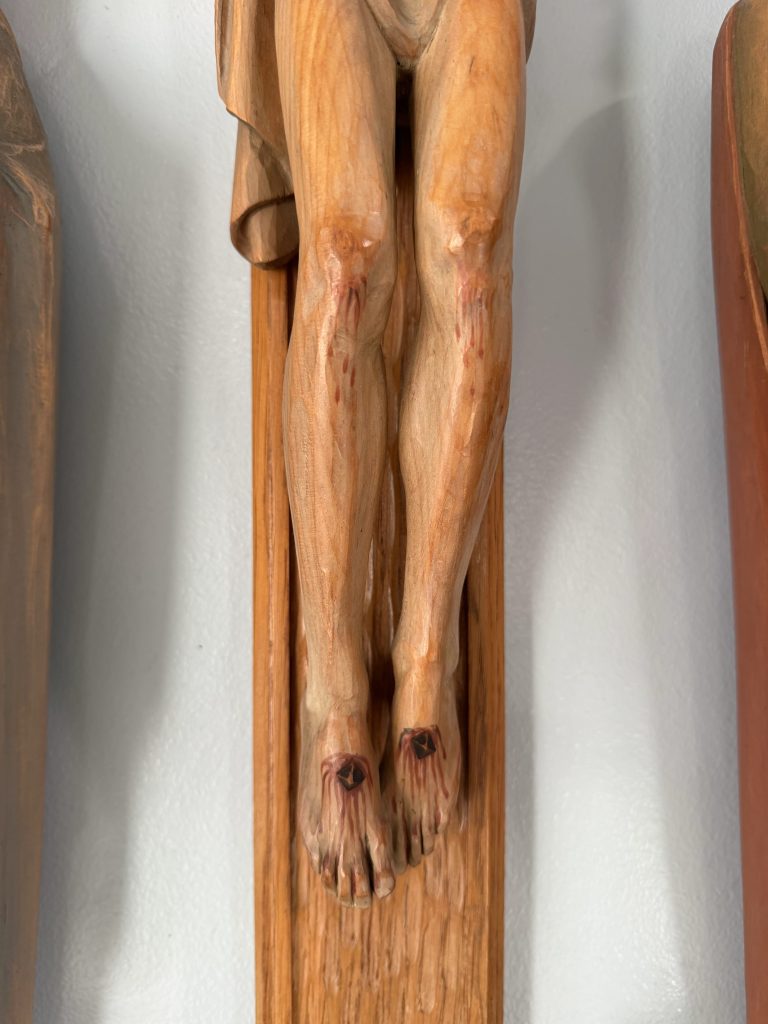
Years later, I found myself returning to those same images of Christ’s Passion, though now through the lens of grief. This past Good Friday, I stood before the empty sanctuary waiting in line to kiss the feet of Christ while the Taizé chant “Jesus, Remember Me” echoed softly through the church. This time, I thought not only of my sister, but also of my grandmother who passed away just a week before holy week. Once I approached the altar where the priest was holding the wooden cross, I kissed the wounds on Christ’s feet aching with the wish of somehow I got the chance to kiss my sister and grandmother one last time too.
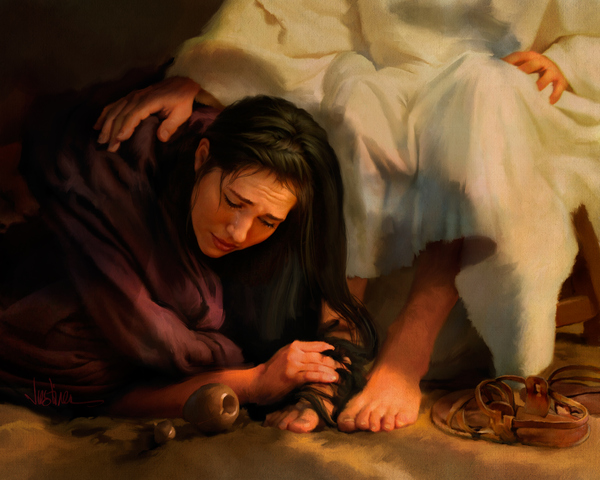
Only a few days earlier during Palm Sunday weekend at a retreat, I had sat on the floor near the altar before the blessed sacrament journaling everything I carried the weight of within my heart. Before me rested a jar laid upon a table with a long veil flowing from within it into a basket below. The image was to portray of how Mary of Bethany poured perfume from her alabaster jar upon the feet of Jesus and wiping them with her hair. Her anointing His feet with tenderness, love, and devotion. On a small piece of paper, I wrote down everything I carried inside me from grief, fear to longing and placed it into the basket.
It was just two days earlier, while walking to church for an adoration night like this, that my mom called to tell me my grandmother had passed away. I remember the strange contrast of returning from my Peru mission filled with joy only to encounter sorrow so soon. From the night I heard the news of my grandmother’s passing, to sitting before the altar pouring out my heart, to kissing the wounded feet of Jesus on Good Friday, I found myself contemplating on the beloved disciple John. The one who leaned close to Christ during the Last Supper, who remained at the foot of the cross when so many others fled, and the one entrusted with Mary. Maybe this is what love and communion truly means. To remain, like John and Mary, near both at the foot of the cross and the empty tomb. To remain through both monsoon storms and seasons of grief when suffering feels unbearable and when hope feels distant, still holding onto the same childlike wonder that first drew us toward Christ.
What must have been like for Jesus to enter into the Judaean desert for forty days and forty nights? To leave behind his mom and cousin before He had gathered His disciples. Was it frightening? Was it lonely and desolate?
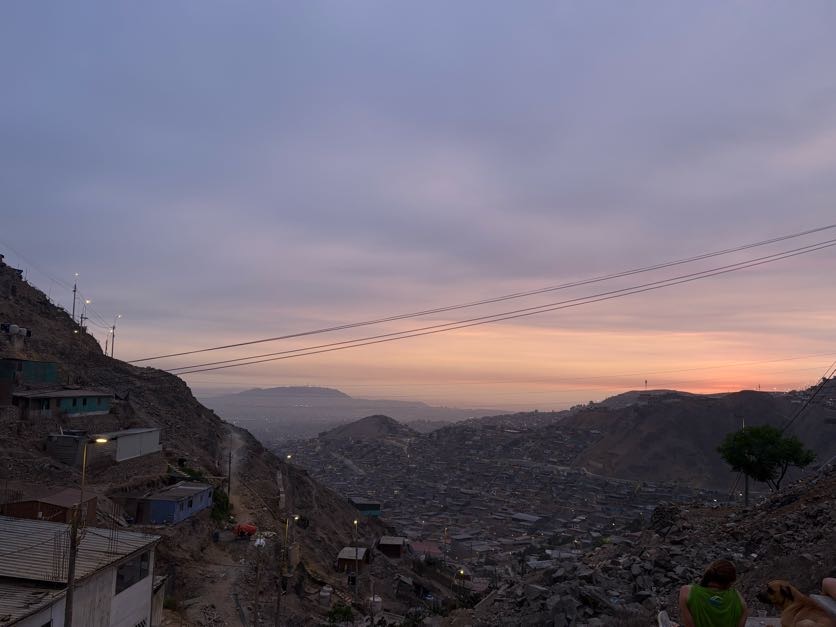
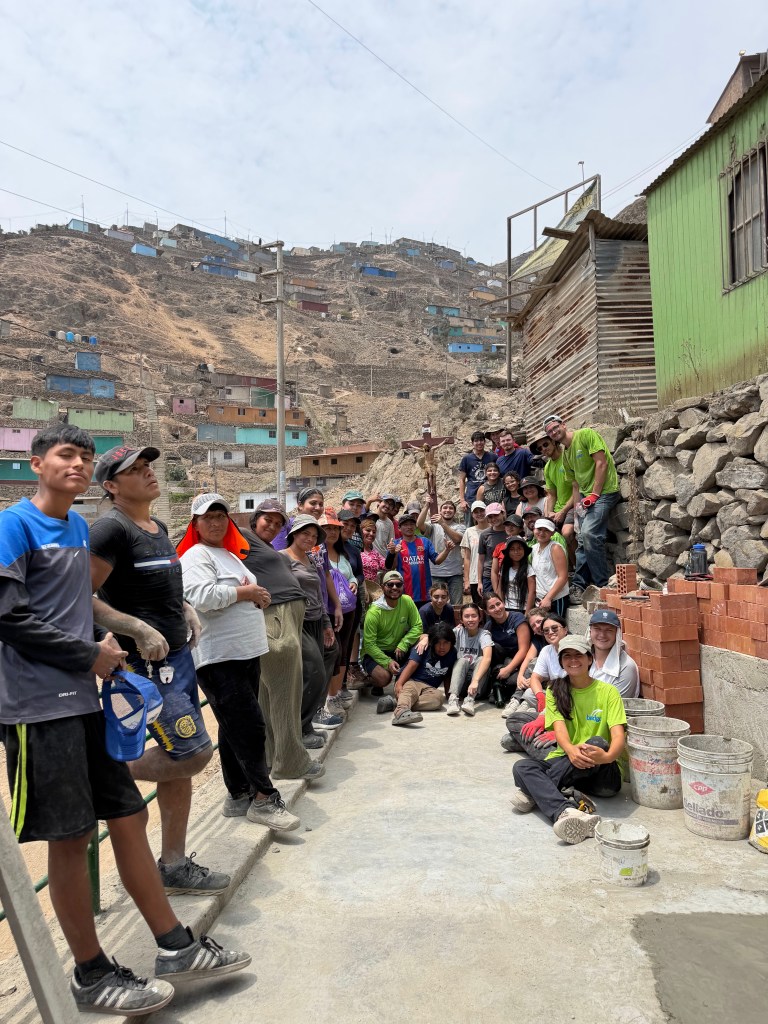
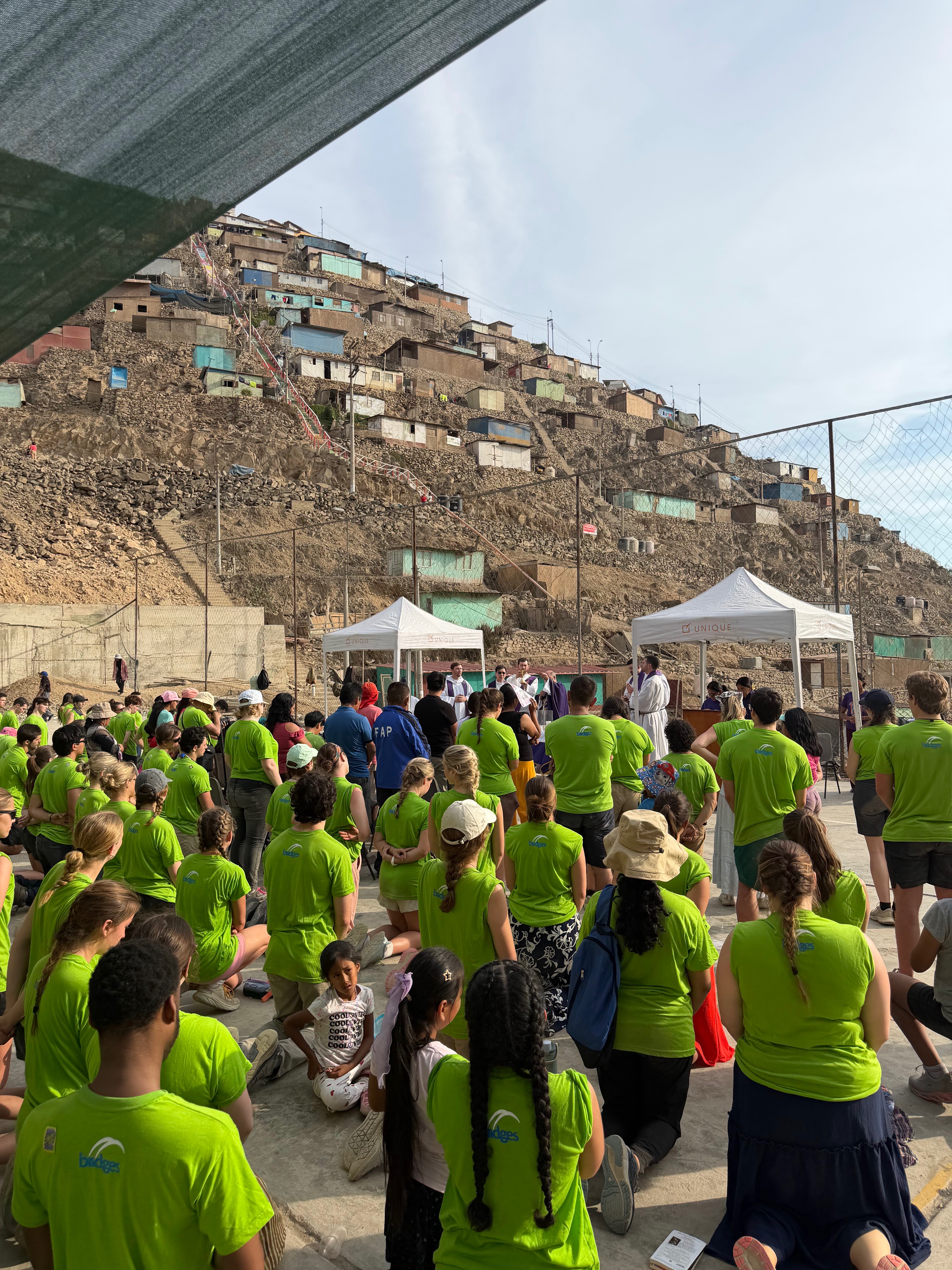
These questions lingered in my mind at the beginning of this Lenten season. When I began my mission trip to Pamplona Alta, a hillside community on the outskirts of Lima, I realized that I too was stepping into my own desert filled with fear and uncertainty. Before the trip, I intentionally avoided researching too much about Pamplona. I wanted to enter into the mission without any preconceived notions, I wanted to embark with an open heart, trusting that despite what awaited us the LORD would provide.
On our first morning in Lima, our group of twenty-four which included college students, young adults, FOCUS missionaries and a deacon boarded a bus toward Pamplona after dropping off our luggage at the retreat house. As we drove past the city, I watched the landscape slowly change from tall buildings and paved streets to dusty hills and simple roadside markets.
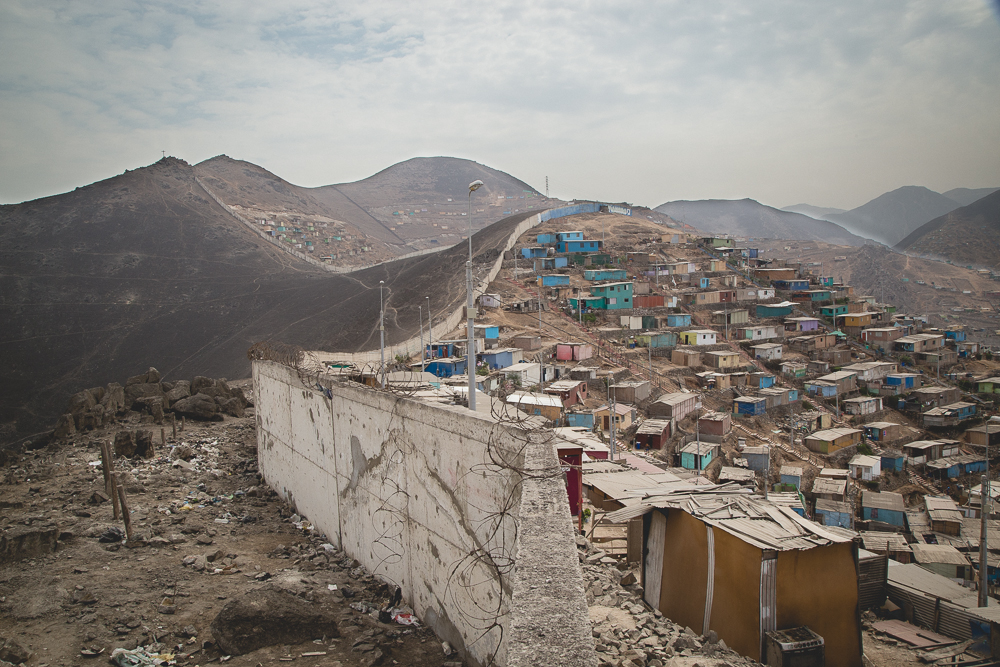
The streets were alive with so much movement. Local buses moved steadily along crowded roads while people patiently waited at bus stops. Moto taxis squeezed through narrow streets, their engines echoing through the roads while vendors called out to passing crowds. Honking horns blended with distant music, barking dogs, and conversation spilling out from roadside shops. The markets buzzed with activity as vendors sold fresh fruit, bread and juices beneath colorful signboards. At first, lima felt overwhelming, but there was sort of a rhythm beneath the chaos, a kind of heartbeat woven into everyday life. Once we began climbing the hills of Pamplona, the realities of poverty became more visible.
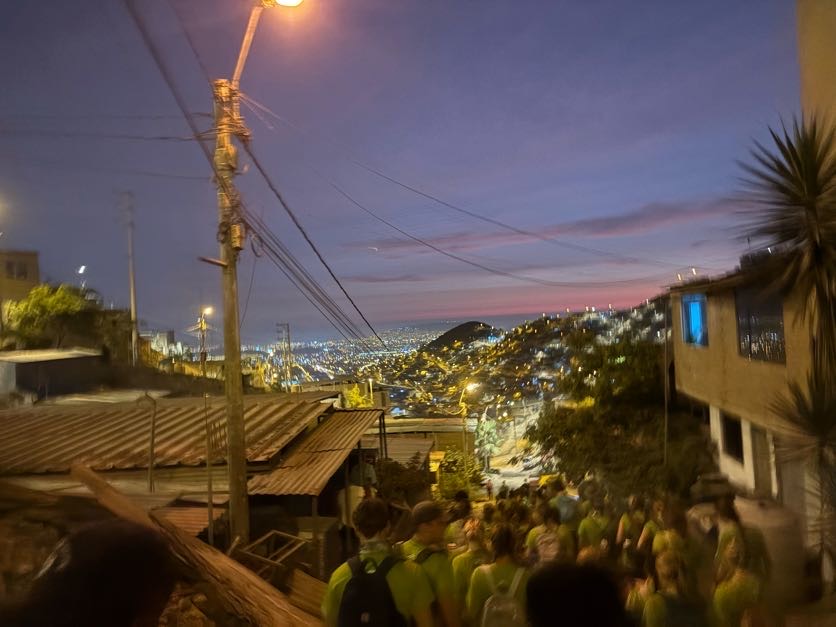
Since the drinking water in Lima was not safe, we carried heavy boxes of water up the hills every day. The sun beat down on us as we carried supplies and work materials, and it did not take long before our legs began to ache. The paths were steep and uneven, made mostly of loose sand with only a few scattered rocks and gravel to steady our footing. The dust clung stubbornly to our skin after every climb. By the time we reached the top of the hills, our shoes were coated in pale sand, sweat had mixed with dust until it settled across our arms and faces like another layer of skin.
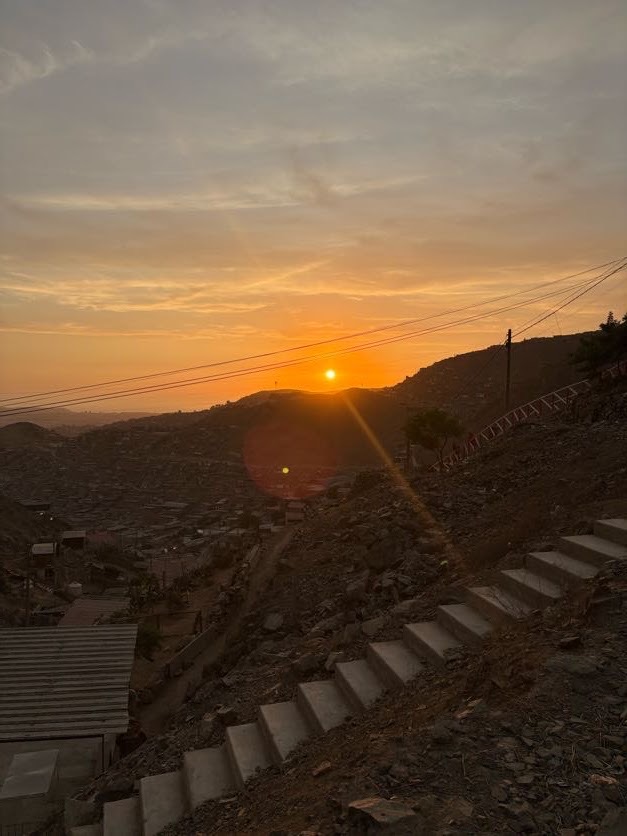
Walking up hills of Pamplona felt both physically exhausting but strangely beautiful. What made the climb even more humbling was watching the local neighbors move through the same terrain with ease. For them, these difficult climbs were simply part of daily life. Many homes built along the hillsides did not even have refrigerators, so families walked down the hills every morning to buy fresh vegetables, fruits and meat to cook for the day. When we finally reached the top of the hills, the cool ocean breeze brought a sense of relief. Near sunset, the hills transformed completely. The harsh desert terrain softened beneath an orange glow while the Pacific Ocean stretched endlessly in the distance.
As the week went on, those hills began reminding me more and more of Calvary, the hill our savior climbed before his death. I could picture the wounded Jesus carrying the weight of the cross on His shoulders, trudging barefoot, enduring the pain while wearing a crown of thorns. As I climbed these hills of Pamplona, in a small way I was able to partake in Jesus’ suffering. I realized what a gift it was to share a small part in His mission.
Yet beyond the physical exhaustion of the hills, I slowly began encountering the deeper wounds carried within the community. Since my Spanish was so broken, I often struggled to have genuine conversations with the people in Pamplona. I listened closely to the missionaries and volunteers who translated stories for us. Through them, I learned more about the realities of life there. One consecrated sister shared with me how there once stood a “Wall of Shame”, a wall that separated wealthier neighborhoods in Lima from poorer communities like Pamplona. Though much of it has since been demolished, it remains a potent symbol of the ongoing struggle against poverty and systematic segregation in Peru.
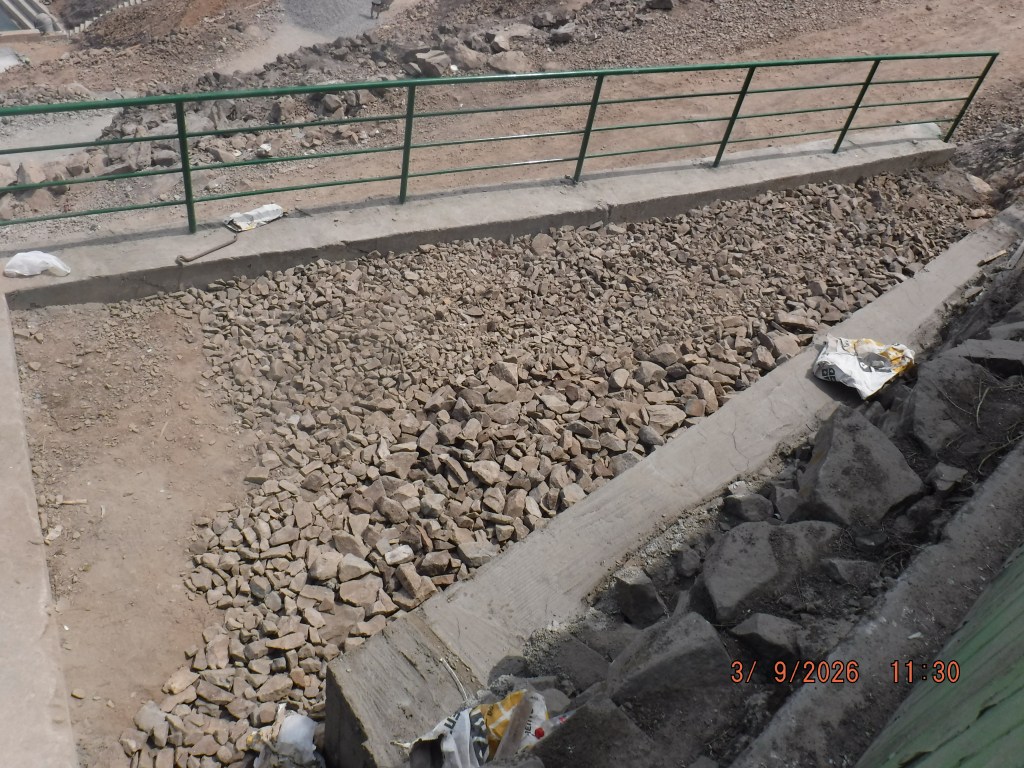
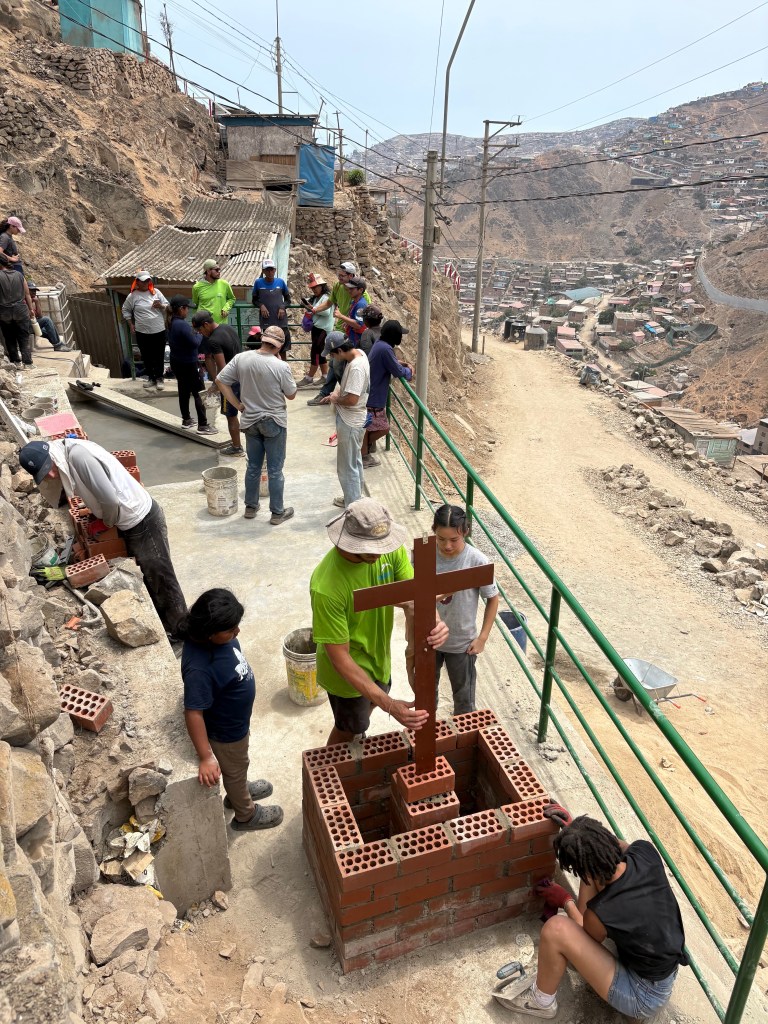
During the week, we helped construct a grotto dedicated to Jesus, transforming what had once been an empty hollow in the hillside into a sacred place of prayer. We gathered rocks from the edge of the hills and formed lines on the stairs to pass materials from one person to another. Many of us had never mixed concrete before, yet the local people patiently taught us how to combine sand, water, and cement until it became thick enough to pour.
The air carried the smell of concrete, sand, sweat, and food drifting from nearby shelter where a group of local women prepared lunch for the volunteers. Our hands grew dusty, our backs ached, and our clothes stayed coated in dirt throughout the day. Yet there was something deeply beautiful about the rhythm of working together. There was laughter in the midst of exhaustion, and day by day, the grotto began to resemble a place worthy of holding an image of Christ. More than anything, I witnessed the strength of community and how GOD meets us in the brokenness of humanity.
During one of the homilies, the priest spoke about forgiveness and the brokenness of humanity while sharing a story from his time serving at an orphanage in Vietnam. One day, a five-year-old girl was left at the doorstep of the orphanage by her father. She was told by her dad that he would return immediately, so every day she waited by the door for him. She had memorized his phone number, so the priest tried calling several times, but there was no response. Months later, the dad finally came back, the little girl immediately ran toward him and embraced him. When the priest asked why she was not angry with her dad for leaving, she simply responded that she knew how hard her father had struggled to provide for her. He had done what he could for her. The priest was so shocked at this understanding and compassion for her father’s misery that conquered more than the fact her dad abandoned her.
Later that same day, after hours of shoveling sand and mixing concrete, our group sat down together for lunch. As we were eating, one of the field staff approached us and shared that one of the local women was having a mental breakdown because her three kids were taken away by social workers.
That evening during adoration, both stories stayed with me. I could not stop thinking about the pain of those parents and the difficult choices they carried. I felt like the mom in Pamplona tried her best to hold onto her kids for long as she could until they were taken away. Whereas, the dad in Vietnam willingly chose to leave his daughter at the orphanage, not because he wanted to, but because he was afraid that his child would suffer. Neither did I feel any bitterness. I found myself thinking about my own parents and the sacrifices they made to bring my siblings and me to the US so we could have opportunities they never had. Though we were not living in extreme poverty, there were still struggles and sacrifices I never fully understood.
During the very last day, I was playing volleyball with the children and other volunteers when I stepped into the shade for rest. One of the girls from my group was holding a little boy, around two years old. When I reached out to give him a high five, he stretched his arms toward me. She warned me he had been hitting people a lot. Funnily enough as soon as I picked him up, he slapped me across the face. I tried calming him by gently rubbing his back. I walked around the court holding him for a while until eventually he rested his head on my shoulders and fell asleep in my arms. I held him there until it was time for us to leave Pamplona. On the ride back to the retreat house, I kept thinking about that little boy. I felt like his tantrums was because he was simply tired and he didn’t how know to express his feelings.
In Pamplona, I began recognizing that every person longs to be fully seen, known, and loved. I saw glimpses of that love everywhere in the smiles of the children, in the strength of the families, and in the community’s generosity despite having so little. As much as we had traveled across the world to encounter physical poverty, I was slowly confronting the poverty and brokenness within my own heart.
One of the most powerful moments of the mission was the Eucharistic procession. On the hottest day of the week, another group descended from a neighboring hill led by a priest carrying Christ in the monstrance. As they approached the volleyball court, praise and worship music echoed through the hills while bells rang loudly. Children who had been running around moments earlier sat quietly in the front, watching with curiosity and wonder.
There, beneath the blazing sun, we spent hours in Eucharistic adoration on the same court where children usually played volleyball. There was a deep stillness in those moments, as if Christ had been present in the hills long before we arrived. Just as He climbed mountains to encounter His Father and serve others, we too are called to climb the mountains within our own hearts.
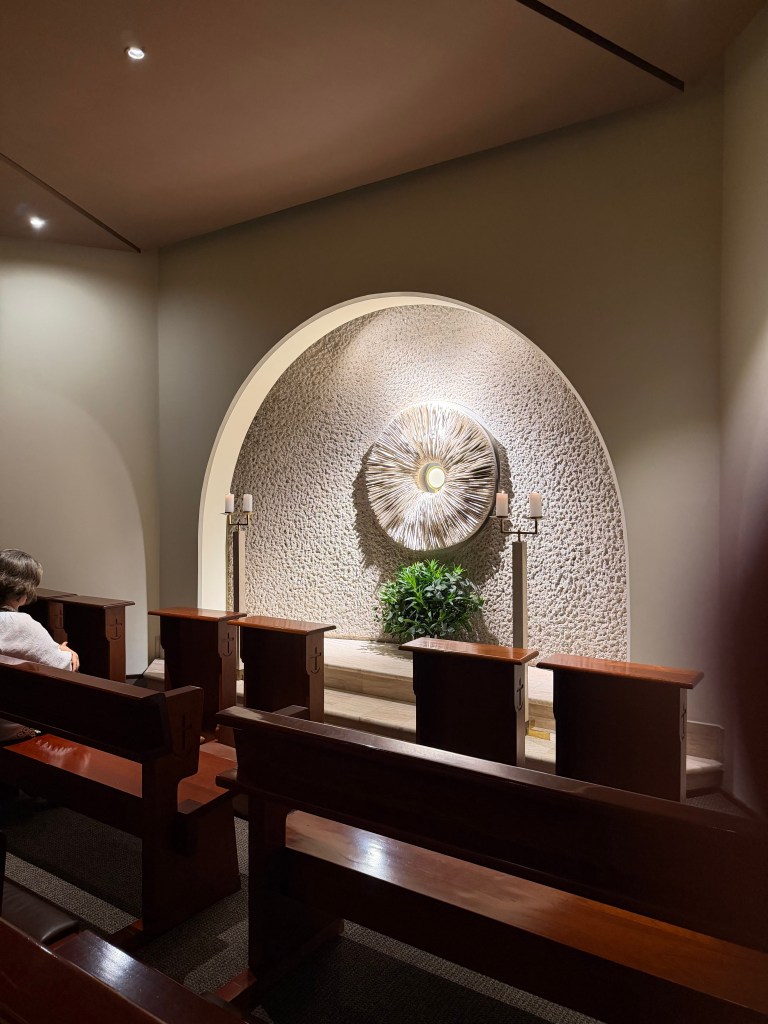
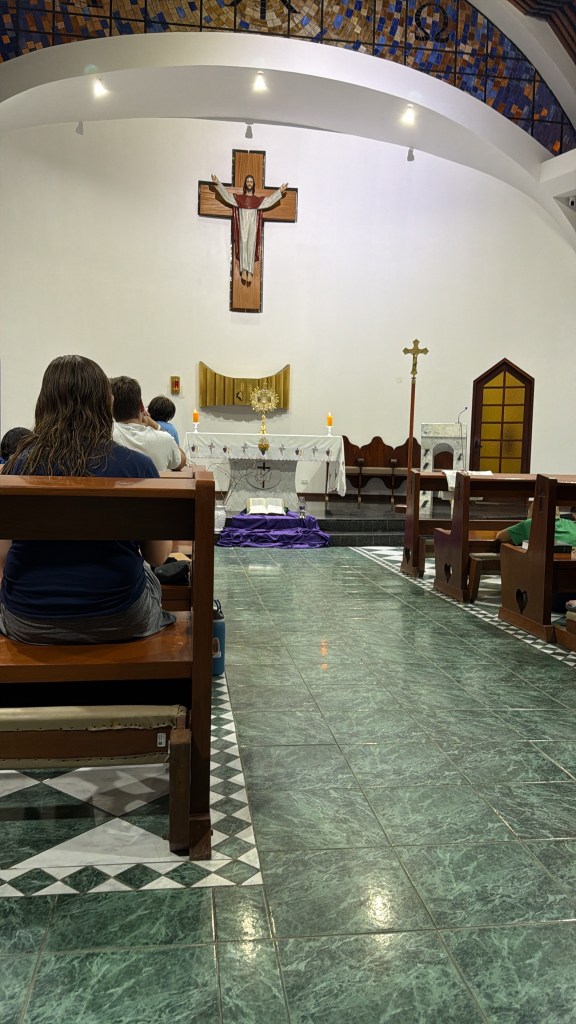
Leaving Peru on the last day felt bittersweet. I did not know whether I would return next year. A few weeks later, back in Philadelphia, after a long day at work, I walked into my parish chapel for adoration. I was so tired and hungry, but as I entered the chapel, I noticed two of the FOCUS missionaries, who were on the mission trip with me, singing praise and worship. When I looked around, I realized many of the people there had been on the mission trip with me in the nearby pews. Looking at Christ at the altar, I was taken back to those evenings in Peru after long days of climbing hills and working beneath the heat. Yet every evening spent before the Eucharist felt like true rest in all ways. Sitting there in adoration at another chapel with my team, I thought of the same Jesus I adored on those dusty hills remained present here in the silence of the Eucharist.
In the end, Pamplona did not leave me only with memories of steep hills, tired hands, and ocean sunsets. It left me with the quiet conviction that God continues to wait for us in every desert, every chapel, and every weary heart willing to encounter Him.
Three years ago, I packed up my life in my hometown of Cary, North Carolina and moved to Philadelphia, a city full of noise and strangers. I remember my parents helping me load up all my belongings into our SUV the day before the big move. Being the only girl, my family was hesitant to let me move to a new city alone. However, I was anticipating this change as I craved independence, a fresh start, and to leave my comfort zone.
During my first week in the city, I tried to get adjusted build a new routine of my life in the city with evening runs. One evening, while jogging back to my apartment, I noticed the church I had visited for Sunday Mass was still open. Curious to know what was happening, I entered through the side door which led me into the main church, lit only by soft glows near the altar. There were people sitting across different parts of the church, practicing silence. At the center of the altar was something I remember seeing my mom back home kneel before to, many times in the past. The Eucharistic Adoration of the Blessed Sacrament (Christ) was being exposed in a golden monstrance (a sunburst-shaped liturgical vessel, typically gold or silver, used in Catholic churches to display the consecrated Eucharistic Host.) It was so beautiful, radiant, and resting still on the altar that I couldn’t stop gazing.
From the choir loft, I heard a girl softly singing a worship song that echoed through the silence. Feeling out of place in my workout clothes, I hesitated to walk and sit near the front of the altar. Instead, I took a seat near the back corner row and simply observed the magnificent silence. A while later, the priest walked to the altar, knelt down, and joined the crowd in singing what sounded like a Medieval Latin hymn. I later learned it was the Tantum Ergo, written by St. Thomas Aquinas, which translates to “So Great Therefore”. As the priest sang, he swung an incense burner, releasing fragrant smoke as a symbol of prayers rising to GOD. Afterward, he walked to the center of the altar and, with his cloak, lifted the Holy Eucharist, moving from side to side and made the Sign of the Cross over the congregation giving the final blessings.
Growing up, I watched my mom attend adoration with a deep love and reverence for the Holy Eucharist. She often encouraged my siblings and me I to join her, but it wasn’t until much later in college that I started to long an intimate relationship with Jesus. But that moment in the church stirred something deep within me. It felt familiar as what I have to what I had seen during my childhood, but completely new. I returned the following week, and each time I felt drawn to my Heavenly Father, as though He was calling me by my name to sit with Him. Over time, adoration became a place of healing and stillness where I felt seen and heard by GOD. It reminded me of how Jesus also sought that closeness, praying in the Garden of Gethsemane in the midst of darkness right before His arrest. Similarly, when I sit before the Blessed Sacrament that represents the Body and Blood of Christ, I am ‘“taken back to the garden’” longing to let the LORD into every hidden corner of my life. Even now, I continue to go to adoration, longing to embrace Him and be held by Him. It was within this same sacred space that I felt His calling for me to write and to pour my heart out for His glory. Even though I have been writing for ten years, it was through Scripture, prayer and my growing love for the Holy Eucharist. I began to let Him be the author and for me to be His pen.
While these past few years in Philly have been liberating and exhilarating, it would be a lie to say that I never felt lonely, exhausted, and full of self- doubt. I moved to Philly seeking a new kind of freedom, but I found something far greater. I found my way back home to my Father. In the stillness of every adoration, I encountered the One who had been waiting for me all along. The same GOD who welcomes His prodigal son home. The same GOD who calls me by my name.
I was four years old on my first day of LKG (Lower Kindergarten) in India. My mom got me dressed in my new uniform and praying with me before the Roopakkoodu, our home altar. Since my dad kept his bike across the river at a neighbor’s house, we crossed over in our little family Vallam (canoe). There was no bridge or boat jetty back then, so we were accustomed to the slow, steady rhythm of crossing the water each day.
When I arrived at my classroom, I remember the sad faces of children left behind for the first time. It was a half-day, and as soon as the bell rang, we all ran outside to meet our parents. I climbed on the front of my dad’s bike as we rode home. I asked innocently the homework question the teacher gave us: “What are your parents’ official names?” With a gentle laugh, he told me their names. Until then, I always referred to my parents as Achachan (father) and Mamma. Even among my siblings, we were called by our pet names. It was the first time I realized names carry both intimacy and identity.
Every evening during prayer, I loved to curl up in my father’s lap as we prayed before the Roopakkoodu. But I never comprehended the gravity of the word Father. As a child, I only knew my earthly father who I could see and touch. My true Father, the one who created me, is transcendent, yet closer than my own breath. Growing up, I always I thought I was praying to God, but I never truly thought of Him as my Father, the One who calls me His beloved daughter. Even when I was taught to recite the Our Father, I did not think about the immense weight behind those words.
It was during college that I tried to form an authentic relationship with GOD through the help of my best friends. Over the past few years as I gradually developed my faith, I contemplate often on the words from Our Father prayer. Beginning with “Our Father, who art in heaven”, I realized that GOD is resting in every part of our body, His temple, restored by His Son’s sacrificial love. When I am reciting that prayer, I feel like the two sons from the prodigal story. Similarly, like the younger son who ran away from his father, I want to seek redemption and run back to my Heavenly Father for HIS forgiveness. Also, like the older son, I find myself carrying a lot of resentment and just want to be held, knowing I am not alone. Whenever, I feel overwhelmed in my emotions, I reiterate the words “Jesus, Rest in Me”. It feels as if I am breathing in His name and Ruah (Breath of GOD) as I say those words.
The east Syrian chant, Bar Mariam portrays the same truth. It is traditionally sung in Aramaic as part of the east Syrian liturgical rite during the Holy Qurbana in Syrian wedding.
He brought forth branches,
The Son of Mary
According to the prophecy, the Son of Mary
Son of GOD whom Mary brought forth
He sanctified the waters, the Son of Mary
He ate the Pasch, the Son of Mary
The hymn proclaims what a gift JESUS, our savior is who came forth from GOD. It signifies the submissiveness and humility of Jesus to which He obeys GOD, and His union with the people. That is why it’s commonly sung at weddings to resemble the union of man and woman, but also the covenant that we make with GOD and His Church.
My brother once shared about his experience at World Youth Day in Fatima, Portugal. During one of the vigil nights, pilgrims from every nation gathered to pray the rosary, each in their own languages. I couldn’t help imagine how intimating it must have been. But I was also able to picture the submission of every pilgrim’s voice, being lifted together to praise and glorify THE LORD OUR HEAVENLY FATHER. The ultimate gift that He gave to us before departing from earth as part of our covenant with him.
Over the years in my life on this earth, I feel blessed to able to lead myself and helping others grow in their prayer life. Because that is the ultimate intimacy we could strive to have. From the Breath of Ruah to the melody of Bar Mariam, I believe the message is inseparable:
We are HIS Children, and He is our Father, Our Abba.
Even the breeze whispers your name, The waves rush and echo your voice, The trees rustle as though they are speaking The sky shines clear, and I feel you are near.
I am clothed in snow-white by Your mercy Even when I stumble in the dark of night, I lift my eyes to the stars above. Longing for you to guide me home.
I fear the shadows as the night draws close, But I trust the light You bring.
Your love is endless like a waterfall, deep as the grave you overcame, rare as a eclipse, inviting as a wave that carries me home
During lent two years ago, I heard Puthen Pana sung in Malayalam. The melody stirred something deep within me, echoing childhood evenings when my grandmother sang it on our verandah (porch) in Kerala. Drawn back into its beauty, I looked up the English translation, and came to know that it was written by a German Jesuit missionary, Arnos Pathiri. He wrote the poem in 14 padams (stages), tracing the life of Jesus Christ from the Annunciation to Crucifixion. In fact, the 12th padam is very much popular during Holy Week in Kerala that moms often sang it at their home after the Good Friday service. It portrays Mary’s lament at the foot of the Cross, a mother’s helpless cry over her lifeless Son:
You informed me of this journey,You wished goodbyes as you went on,
But you returned, laid on my lap,
What was done, my Son?
The sight of the blood streaming down,
Your face was stained with deepest red,
My heart trembled at this horrid sight,
I’m in pain, my Son!
Listening to this hymn makes me not only feel Mary’s grief, but also the profound emptiness of the womb that once bore the Savior. Her arms cradled Him in death just as once her womb had cradled Him in life. Often, I pray the rosary on my way home from work and sometimes have a habit of wrapping the rosary around my hands, caressing the beads as though caressing my own empty womb. In those moments, I pray for all women carrying life, longing for life, or grieving its loss. I think about the woman in my own life starting from my mom who lost her two-year old daughter, and my grandmother who waited 10 years for her son, my dad, to be born. Her steadfast prayer during that time, the rosary she said every day, and the way she lead our family in evening prayer in India remain in my mind. In their stories, I see reflections of Mary, whose womb once led Christ and the emptiness she must have felt at His death. I thought, too, of Mary Magdalene, whose grief came not from motherhood but losing the Lord who had restored her life.
Just last month, I had a dream that a woman was standing before the empty tomb of Jesus. Her face was filled with sorrow, her posture bent in grief. Suddenly, a little boy ran towards her, joyfully shouting, “The LORD IS RISEN!” I woke up with a heart full of joy and profound stillness, and I wrote everything down to bring it to prayer.
A few weeks later, I attended a silent retreat at the Ignatius Center focused on the very theme of Mary Magdalene. At first, I was terrified because I was traveling to a place I have never been before and unsure of what the silence might reveal. But I experienced a stillness unlike anything I had known before. It felt like returning to the silence of the womb, hidden yet held, vulnerable yet surrounded by love. It felt as though Jesus was drawing me into that moment, into a place beyond time and where stillness met longing.
Like Mother Mary grieving her Son, I felt Mary Magdalene’s anguish standing in front of the empty tomb and her mere hopelessness of not knowing where Jesus was. This was the man who had seen her, loved her, and restored her when her life had been broken.
In that stillness, I sensed His invitation: To be present,
To hold steady
To pick up my cross
And to walk with him
And to stay with him
It was a beautiful weekend in the outskirts of Atlanta. There were many times I was sitting out in the woods, and I felt embraced by nature and my creator, allowing me to let go of anything that was weighing me down. At one session, we were guided through a movement activity by a Yoga Director, but wove together Ignatian spirituality and theology. Each movement became a prayer invitation to Jesus, allowing him into my body and release any tension. One elderly woman even shared with me that her husband died last year, and she carried so much bitterness toward God. But this retreat helped her finally towards her healing journey.
This past week, as the Church celebrated the Assumption of Mary, I contemplated on her journey from the womb that bore the Savior, to the sorrow of the tomb, and to the glory of heaven. Her story is not only Christ’s but also ours. It is narrates the story of passing through grief into joy, silence into song, death into life.
Ever since I was a child, I was taught that Christmas and Easter are the most significant time of the year for Christians. As I have grown closer to GOD, I see how both seasons proclaim the same divine truth: light breaking into darkness. At Christmas, the light of the North Star guided the Magi to the infant Jesus. In the Book of Genesis, GOD spoke light into the void, piercing the darkness. At Easter, we celebrate the dawn of new life and hope, dispelling the darkness that swept over when Jesus died and the ground shook. For my family, these seasons have always carried both joyful and painful memories. My sister passed away during Holy Week, the day after Good Friday, before my younger brother and I was born. Her absence has been a quiet ache in my parents’ hearts and silently has shaped the way we enter into these sacred days.
From a young age, I remember my mom preparing Pesaha appam and paal (milk) on Holy Thursday. It is a tradition rooted deep in our Syrian Christian Heritage, in remembrance of the Passover that Jesus shared with his disciplines before HIS arrest. On the morning of Holy Thursday, my mom would tidy up the kitchen, then begin with a quiet prayer before she starts cooking. She stays in that spirit of prayer as she makes the appam and milk. Watching her, I always thought of Mother Mary’s steadfast and forgiving nature even in the shadow of suffering. After moving to Philly, I missed these simple moments of Holy Week, but GOD has blessed me in new ways to enter into this season.
Last Lent, I attended a retreat where as part of one of the hands-on-activities, we were each given a pebble stone to write our qualities, flaws and burdens upon. And once ready, we washed the stone in a basin, mirroring how Jesus washed the disciples’ feet. It was a small act but deeply symbolic, an invitation to let GOD cleanse what weighs us down.
That same Holy Week, I experienced the Tenebrae service for the first time at my parish Latin Church on Good Friday. It was a solemn and heavy experience.
As it is written in Luke 23:44 “And it was about the sixth hour; and there was darkness (Tenebrae) over all the earth until the ninth hour.”
The service walked us through Christ’s journey to the cross in Scripture, song, and the Lamentations of Jeremiah, which mourns the destruction and desolation of Jerusalem. As Christians, we believe Christ is the new temple, which is why HE said in John 2:19 “Destroy this temple and in three days I will raise it up.”The lament is not just about the ruin of Jerusalem, but about the crucifixion and death of Christ, and HIS body which is the true temple that was abused and destroyed.
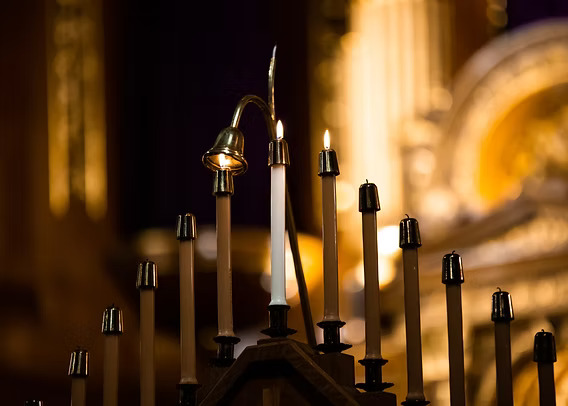
During the Tenebrae, a server in a black cloak, wearing heavy boots, walks out after each reading, creating the echoing stomp noise (strepitus). As the candles are extinguished one by one following every anthem, the darkness deepens until only the final candle remains. Instead of extinguishing the last candle, the server removes that last light from the triangular stand and hides it behind the altar. Then comes a loud, jarring noise, symbolizing the earthquake that follows afterwards. This final act symbolizes Christ’s death, burial, and descent into hell to bring salvation to the righteous who died before him. And ultimately, the hidden light returns, just as Christ rose again on the third day. This service stays with me deeply each time because I know what it is to feel the weight of darkness. The same darkness and grief that my parents have felt on that particular Good Friday when my sister died. Yet even in that grief, light was already on its way. My mom soon learned she was pregnant with me, and by the following Christmas she almost due.
In my own walk with GOD, I have faced seasons of loneliness and isolation. At times I ran from him, only to be drawn back through communities like Jesus Youth and the young adult group at my parish, where friends help keep me grounded in my faith. Every year, Tenebrae reminds me that the darkness of Good Friday is never the end of the story. The hidden light always returns. And the Resurrection assures me that no matter how deep the shadow, the dawn will come. And it comes with the unwavering truth that Christ has conquered death, and His light will never be overcome.





You must be logged in to post a comment.